Capture on site
A QR code, a tablet, a text-to-join keyword, and a reason worth giving your details for. Every activation should grow the owned list, because it's the only part of the day you still own next quarter.
Event activations & experiential marketing · Orange County
Pop-ups, retail sampling, launch events, fairs and brand activations, planned and marketed by one senior marketer. Built for brands doing $1M to $20M, not stadium budgets.
 Orange County, CA
Brands Jennifer has led marketing for
What it actually covers
Most people searching for an event marketing agency in Orange County are not planning a user conference. They're trying to get a real product into real hands: a new SKU that just landed at a regional grocer, a DTC brand tired of existing only on a screen, a local business that wants to own its neighborhood.
Event marketing, also called experiential marketing or brand activation, is the part of your plan where a human meets your brand in person. It collapses the funnel: someone goes from never having heard of you to tasting or trying the product in about ninety seconds, and if you did it right, you walk away with their email address and a phone full of content.
For a brand your size it takes one of six shapes, and picking the right one matters far more than how pretty the booth is.
The closest cousin to this in my own work is Farmland Traditions, where I ran the paid influencer program that supported the brand's launch into Target. That's the pattern I care about: an in-market retail moment backed by creators, so the launch reaches past the people standing at the table. There's more on the Brightwork homepage and in the work section.
Event Activations is one of nine services here, which is why the events tend to work. The person planning the activation runs the email list, the paid ads and the creator program it feeds. Nothing gets thrown over a wall.
Local knowledge
This county is an unusually good market for activations, and a crowded one. Knowing which doors are actually open to a small brand is most of the job.
The big rooms. South Coast Plaza in Costa Mesa anchors retail here, with more than 250 boutiques according to Travel Costa Mesa, the city's visitor bureau. Irvine Company Retail runs a formal pop-up leasing program spanning Irvine Spectrum Center, Fashion Island in Newport Beach and The Market Place, and its pitch to brands leans on dwell time rather than raw footfall. Real options, all leased, scheduled and competitive, which is why lead time matters.
The fair. The OC Fair & Event Center in Costa Mesa runs the fair for roughly 23 days from mid-July into mid-August, dark on Mondays and Tuesdays per the Fair's published schedule, and hosts markets and shows the rest of the year. It's the biggest concentration of walking, buying, snacking OC residents you'll find, and vendor space goes early.
The weekly circuit. Orange County's certified farmers markets are the most underrated channel for a small food, beverage or wellness brand. Patch's 2026 Orange County market guide lists dozens on nearly every day of the week: Aliso Viejo and Laguna Beach on Saturday mornings, San Clemente Village and Newport Beach on Sundays, Dana Point Harbor and Lake Forest on Wednesdays, Surf City Nights in Huntington Beach on Tuesdays. Cheap to test, repeatable, full of people already holding a tote bag.
The beach cities calendar. Summer in Laguna Beach is an event economy of its own, with the Sawdust Art Festival and the Festival of Arts running the season, and every coastal city from Huntington Beach to Dana Point stacks concerts, races and parades. Wonderful crowds, and the hardest to convert with a banner and a smile.
Geography drives return here more than people expect. A Saturday in Irvine reaches a different buyer than a Sunday in Newport Beach or a weekend in Costa Mesa. Choosing badly is the costliest mistake an event marketing agency in Orange County can make for you, and it happens before a dollar goes into the booth.
Activations in California come with an admin layer. A 2026 Orange County vendor guide from Dreamers Markets lays out the usual stack: a California seller's permit, a city business license (roughly $50–$150 a year), a certificate of insurance with $1M general liability, which vendor policies commonly price near $30 per event or $300 a year, and, for anything edible, a temporary food facility permit plus a cottage food or commercial kitchen permit behind it.
None of it is hard. All of it takes time. It's the most common reason a brand misses the date it wanted, which is why the timeline below starts where it does.
boring, and non-negotiable ✦Where the return comes from
A great day with no capture, no content and no follow-up is an expensive nice time. Three systems turn a few hundred conversations into something you can still measure in November.
A QR code, a tablet, a text-to-join keyword, and a reason worth giving your details for. Every activation should grow the owned list, because it's the only part of the day you still own next quarter.
One person whose only job is shooting: product in hands, real reactions, vertical video, stills for the site and the ad account. A well-run day produces enough raw material to feed social and paid creative for weeks.
Invite the right local creators, brief them properly, and the moment reaches thousands who never walked past. Paid creator programs are how a small footprint starts behaving like a media buy.
Those three pieces are separate services on their own, and they connect here: the email marketing side gives the captured list somewhere to go, the influencer program carries the day past the venue, and if the activation exists to support a retail rollout, the plan should sit inside a wider retail launch marketing strategy rather than floating on its own.
Planning timeline
Almost every activation that goes sideways went sideways in week one, not on the day. Here's the rhythm I plan to.
Smaller community activations can come together in three or four weeks if the venue is friendly and nothing edible changes hands. Anything with a fair, a mall or a grocer attached needs the full runway. The part I never compress is the follow-up plan; that gets designed in week one.
Honest money talk
There is no rate card. What I can give you is market context and an honest line-item list.
Start with the ceiling, because it explains why the category feels out of reach. Elite Multimedia's 2026 experiential cost guide puts a modest branded trade show environment at $60,000 to $300,000 and a flagship activation at $350,000 to $2.5M and up. Those are the numbers big production shops are built around, and a different sport from what a $1M to $20M brand needs.
At your scale the budget is mostly people and product, not fabrication. Staffing is the line most often guessed at: according to ZipRecruiter, brand ambassadors in California average about $19.95 an hour, with the middle of the range roughly $16 to $23, so a two-person, eight-hour day is a plannable number rather than a mystery.
My rule is simple and slightly unpopular: if the budget tightens, cut the booth build before the follow-up. A beautiful table with no email sequence behind it is a decoration. For wider context, read what marketing costs for an Orange County small business.
Measurement
"Great energy" is not a metric. These five are, and we agree on which matter before anything gets booked.
The reason to fix these up front is that events are the easiest marketing to lie to yourself about. A busy table feels like a win. Four hundred new subscribers and a month of content is a win, and one you can put in a spreadsheet next to your paid social numbers.
It also changes how you choose venues. Once you know a Saturday market delivers subscribers at a fraction of your paid cost per lead while a big festival delivers half the emails, the calendar builds itself. That's the useful part of hiring an event marketing agency in Orange County rather than an event planner.
The Brightwork difference
Search this category and you'll mostly find directories, plus agencies built for national budgets. Here's the honest difference for a company doing $1M to $20M.
There's a genuine gap here. Search for an event marketing agency Orange County and the first page is mostly directory listings, plus a couple of results that aren't even in California. No local studio has claimed the term for small brands, which tells you how underserved this end of the market is.
Brightwork is boutique by design: no account managers, no junior team learning on your budget, just a marketer with an MBA and 12+ years growing brands who'll also be there at 6am helping carry the table. That's why the events tend to connect to revenue instead of ending in the parking lot. See how it fits the wider picture on the Orange County marketing agency page.
Meet your marketer
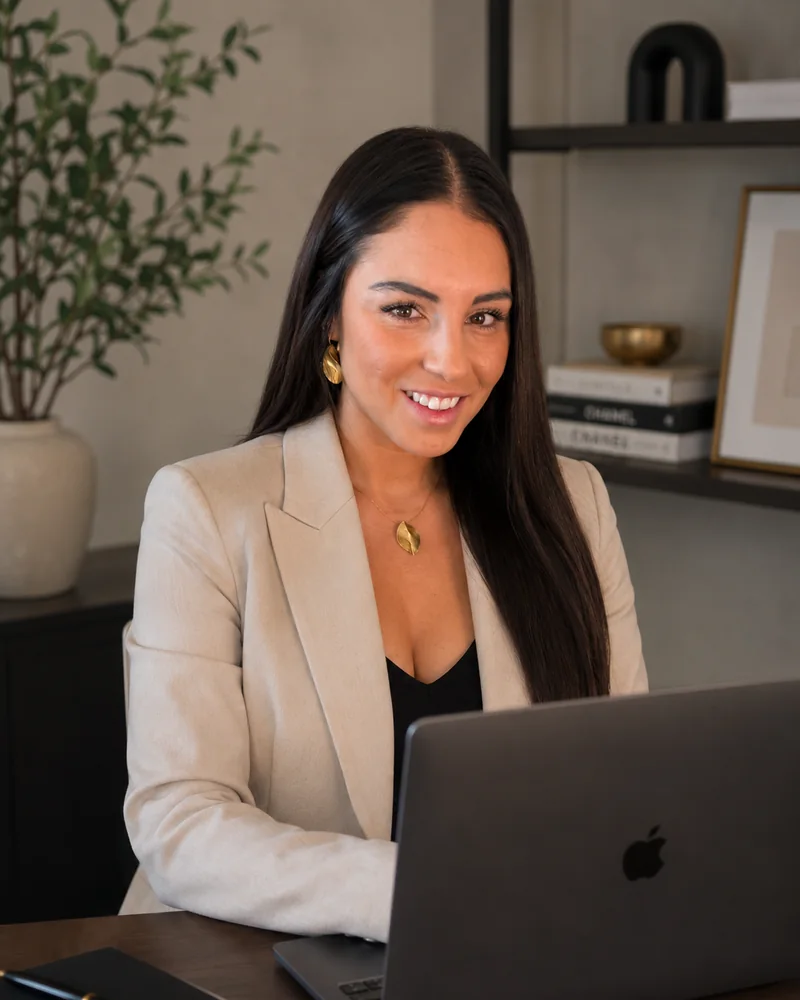
I'm Jennifer Asher Cardenas, and Brightwork is my small-by-design studio in Aliso Viejo. Over 12+ years I've grown 50+ brands, earned my MBA, and led marketing for national and local companies alike. Event activations are one of my nine services, and I run them the way I run everything else: personally.
Boutique means no telephone game. The person who picks the venue writes the talk track, briefs the creators, and reads the numbers 30 days later. And because I'm fluent in English and Spanish, your table can work in both, which matters more than people expect at a Saturday market here.
Areas served
Based in Aliso Viejo and working county-wide, from the beach cities up through the Irvine corridor. As an event marketing agency in Orange County, most of my activation calendar sits within a 40-minute drive, which is exactly the point.
If the activation is part of a bigger push, it belongs next to a retail launch plan, a creator program and an email and SMS list ready to receive everyone you meet. Start at the Orange County marketing agency hub.
Good questions
Straight answers to what founders ask before booking their first activation.
There's no flat rate: a Saturday farmers market booth and a three-day pop-up at a major retail center are different animals. Budget by line item instead: space or booth fee, staffing, product and samples, signage and fixtures, permits and insurance, content capture, and the follow-up campaign. As market context, Elite Multimedia's 2026 experiential cost guide puts a modest branded trade show environment at $60,000 to $300,000 and a flagship activation at $350,000 to $2.5M and up, which is the world large production shops are built for.
At $1M to $20M, start with a single day or weekend where the biggest costs are people and product, not fabrication. I scope each one to the goal on a free discovery call, and there's wider context in what marketing costs for an Orange County small business.
Eight to twelve weeks is the sweet spot for anything with a venue, a permit or a retailer attached. Fairs, festivals and the better farmers markets fill vendor slots months ahead, food permits take real time with the county, and custom signage has its own production clock. Smaller community activations, a partner night at a studio or a brewery, can come together in three or four weeks. What can't be rushed is the follow-up plan, so we build that first.
Yes, and small budgets often perform better because they force focus. One well-run Saturday at the right market, with a table people want to stop at, one clear offer, a QR code capturing emails and SMS, and someone who knows the product, will beat a bigger spend where nobody is in a buying mood. The trap is spending everything on the setup and nothing on what happens next. If money is tight, I'd rather cut the booth build than the email sequence that runs the week after.
Usually a mix. Founders should be there when they can, because nobody tells the story better, and your own team knows the product cold. Beyond that we hire local brand ambassadors for the day. According to ZipRecruiter, brand ambassadors in California average about $19.95 an hour, with the middle of the range roughly $16 to $23, so staffing is a real line item worth planning. I write the talk track, the qualifying questions and the capture flow, so whoever is standing there does more than hand out samples.
Both, scoped to what you need. Brightwork is a boutique studio, not a production house, so here's the honest line: I plan, book and run small to mid-sized activations end to end, and on larger builds I lead strategy, creative and marketing while a specialist production partner handles fabrication and logistics. What I never hand off is the part that makes an event pay: the offer, the capture, the content and the campaign after everyone goes home.
It depends entirely on who you're trying to reach. Food, beverage and wellness brands usually do best where people already came to buy: the certified farmers markets, which run somewhere in the county nearly every day of the week per Patch's Orange County market guide, from Aliso Viejo and Laguna Beach on Saturdays to San Clemente Village on Sundays and Surf City Nights in Huntington Beach on Tuesday evenings. Lifestyle and apparel brands look at retail foot traffic instead: Irvine Company Retail runs a pop-up leasing program across Irvine Spectrum Center, Fashion Island and The Market Place. The OC Fair and Event Center in Costa Mesa hosts the fair for roughly 23 days from mid-July into mid-August, plus events most weekends. The right venue is the one closest to your buyer, not the one with the biggest crowd.
We decide that before anything gets booked. The numbers I care about are leads captured, meaning emails and mobile numbers collected with consent, cost per new subscriber held against what those contacts would cost on paid social, sell-through at the retail door in the two weeks after, and content produced. Then we watch what those contacts do over the next 30 days. An activation that adds four hundred subscribers and a month of content isn't a soft win; it's a media buy with a party attached.
Say hola
Tell me what you're launching, who you need in front of it, and roughly when. Every engagement starts with a free, no-pressure discovery call, just two people working out whether an activation is the right move.