Gifted seeding
Product for a chance at a post, no guaranteed deliverable. Cheap and useful for testing who likes your product enough to talk about it. Expect a low post rate, and never build a launch calendar on it.
Creator & UGC programs · Orange County
Vetted creators, usage rights you actually own, and measurement tied to revenue. You work directly with Jennifer Asher Cardenas, not an account manager.
 Orange County, CA
Brands Jennifer has led marketing for
What's actually included
An influencer program is not a list of people to mail free product to. It's a small system, and most of the money gets lost in the parts nobody mentions at kickoff.
Strategy first: who are we reaching, and what does a creator genuinely do better than an ad? If the honest answer is "nothing," I'll say so and we'll spend the budget elsewhere.
Then sourcing and vetting, the least glamorous and most important step. Where a creator's audience actually lives, comment quality versus volume, saves and shares rather than likes, and whether their following grew on a believable curve. A creator with 8,000 real local followers beats one with 80,000 bought ones.
Then the deal and the paperwork: briefs that give a creator a job to do instead of a script to recite, a structure (paid, gifted, affiliate, or hybrid), and contracts covering exclusivity, FTC disclosure, and the clause small brands forget most often, usage rights.
Then measurement. With influencer marketing for small brands, most of the return shows up in the reuse layer, not in the creator's own post. Any agency reporting only impressions is hiding the ball.
The honest version
One macro creator or twenty micro creators is a real decision. I'll tell you which way I lean before you ask: micro plus UGC, nearly every time, at this revenue range.
First, market context, clearly labeled as market context. According to Influencer Marketing Hub's rate guide, Instagram rates run roughly $10–$100 per post for nano creators (1K–10K followers), $100–$500 for micro (10K–50K), $500–$5,000 for mid-tier (50K–500K), and $5,000–$10,000 or more for macro (500K–1M). Those are published industry ranges, not Brightwork client data, and real quotes swing hard on niche, exclusivity, and usage rights.
The same source reports that nano creators on TikTok average interaction rates just above 10%, well ahead of larger accounts, and that roughly 52.8% of respondents to its 2026 benchmark survey planned to expand their use of micro creators, the highest net growth of any tier. The trust premium sits at the small end.
The arithmetic is simple. Twenty micro creators give you twenty audiences, twenty concepts, and twenty pieces of licensed content you can run as ads for six months. One macro creator gives you one post and an invoice that eats the quarter. Macro earns its keep in specific moments: a launch that needs one credible face, or a buyer meeting where a recognizable name helps. Outside those, spread it.
There is a real trade-off. Twenty relationships means twenty briefs, twenty contracts, and twenty creators who might ghost you in week three. That coordination is the work, and it's why a micro influencer agency Orange County founders can reach directly beats a self-serve platform for any brand without a full-time creator manager.
How creator deals get built
"Do we pay them or just send product?" is the first question founders ask. There are six common structures, and most good programs use three at once.
Product for a chance at a post, no guaranteed deliverable. Cheap and useful for testing who likes your product enough to talk about it. Expect a low post rate, and never build a launch calendar on it.
A flat fee for defined deliverables on a defined date. What you use when timing matters: a launch window, a seasonal push, a product drop. You're buying certainty and, if you negotiate it, reuse rights.
A unique code or link and a share of the revenue it drives. Low risk, cleanest attribution you'll get. The catch: strong creators rarely work affiliate-only until you've proven the product converts.
You commission content and the creator never posts it. The quiet workhorse of a UGC agency Orange County brands hire in 2027: you buy footage, own the rights, and run it in paid social, Amazon listings, and email.
You run ads from the creator's handle instead of your brand page. Same content, a real face and name attached, usually a better click-through rate. Requires explicit permission in the contract, so negotiate it early.
A small monthly fee for a steady drumbeat of content from creators who already love the brand. Better content, better rates, Worth it once you know who moves product.
Nothing here comes off a rate card. A good influencer marketing agency Orange County brands work with scopes the mix to your calendar, not to a package. For context, read what marketing costs for an Orange County small business.
The rare part
This is the piece of my background I care most about, and it's uncommon in this category. For Farmland Traditions I ran a paid influencer program that supported the brand's launch into Target. That's the whole claim, and it's enough: creator work pointed at a retail outcome, not a vanity gifting round.
Pointing a program at retail changes every decision. Geography stops being an afterthought, because a creator whose audience lives nowhere near the chain's stores can't help sell-through. Timing tightens, because content has to be live while product is on shelf. And messaging changes: "link in bio" becomes "look for it at your store," a harder ask needing a better brief.
The audience widens too. Buyers notice demand signals, and a visible wave of real people using the product, posted publicly, beats a deck of projections.
If you're heading into shelf space, read the companion piece on what a retail launch actually requires, then see the brands I've worked with.
Sampling days, demos, and pop-ups are the cheapest content shoots you'll ever run: the product is out, the people are there, and creators can capture a week of footage in an afternoon. That's why creator work and event activations share a calendar.
Where the ROI usually hides
Most brands discover this a year in: the post is rarely where the money is. The money is in what you do with the footage afterward.
A polished brand video and a creator holding your product in her kitchen cost wildly different amounts to make, and on most feeds the kitchen wins. Creator content looks native, so people watch longer before deciding it's an ad. License twenty pieces of UGC and you aren't buying twenty posts; you're buying a creative library that keeps paid social from fatiguing.
That library has three jobs. Paid social: run the best creator cuts as ads, and where the contract allows, from the creator's own handle via whitelisting or Spark Ads. Owned channels: product pages, email, and SMS convert better with real-person content than studio stills. Marketplaces: creator video does heavy lifting on Amazon listings and A+ content, the work behind the Amazon creative rebuild for Pad Genius.
All three depend on one boring sentence in a contract: without paid usage rights, whitelisting permission, and a stated term, you own a nice post and nothing else.
The other half is capture, which is why every program pairs with an email and SMS program that turns curious visitors into a list you own. A creator's audience is rented. Your list isn't.
Local reality check
Search "influencer marketing agency Orange County" today and you'll mostly get directory listings rather than anyone doing the work locally. Meanwhile the county is thick with creators: lifestyle and wellness accounts built on the beach-city aesthetic, food creators in the Costa Mesa and Anaheim restaurant scenes, fitness and pilates creators, family accounts inland, and a deep bench of Spanish-language creators.
Now the honest part: local is not automatically better. If you sell a national DTC product, a creator in Austin with the right audience beats a creator in Newport Beach with the wrong one. Geography is a targeting input, not a virtue.
Local matters in three cases: when you have physical locations and a creator's audience has to be able to drive to you, when you're launching into regional retail, and when you're running an event. Otherwise, cast for audience fit first and zip code second.
For the wider view, start at the Orange County marketing agency hub, or the local pages for Newport Beach and Costa Mesa. If your buyer is bilingual, so should the program be: see bilingual marketing in Orange County.
How it runs
Creator programs need a rhythm, not a launch date. Here is the shape most settle into.
Timing flexes with your calendar. A brand chasing a Q4 shelf date works backward from the on-shelf week, which means creator outreach starts in summer. That lead time is the difference between a program and a scramble, the same discipline behind holiday marketing in Orange County.
What to avoid
Most influencer money is wasted in predictable ways. Two before the list: an agency that won't name creators is selling a database subscription, not curation, and a brief that reads like a script converts badly.
Measurement
Influencer attribution is imperfect, and any agency that tells you otherwise is guessing with confidence. Here's what measures well, and where the honest gaps are.
The cleanest number in the program. Run creator content against your existing ads and compare cost per thousand impressions, hook rate, and cost per click. If licensed UGC beats your studio creative, the program paid for itself.
A unique code and link per creator tells you who drove direct sales. It undercounts, always, because people see a post and buy later through search or email. Treat it as a floor, never the ceiling.
Where product sits on a shelf, watch units per store per week in creator markets against comparable ones. Directional, not proof, because promotions and placement move at the same time. Say so in the report.
Two more worth tracking: email and SMS signups during a wave, and cost per usable asset. One rule throughout: no invented attribution. Any influencer marketing agency Orange County brands hire should be able to defend every number in the report, the standard applied to retail launch planning too.
Who you're hiring
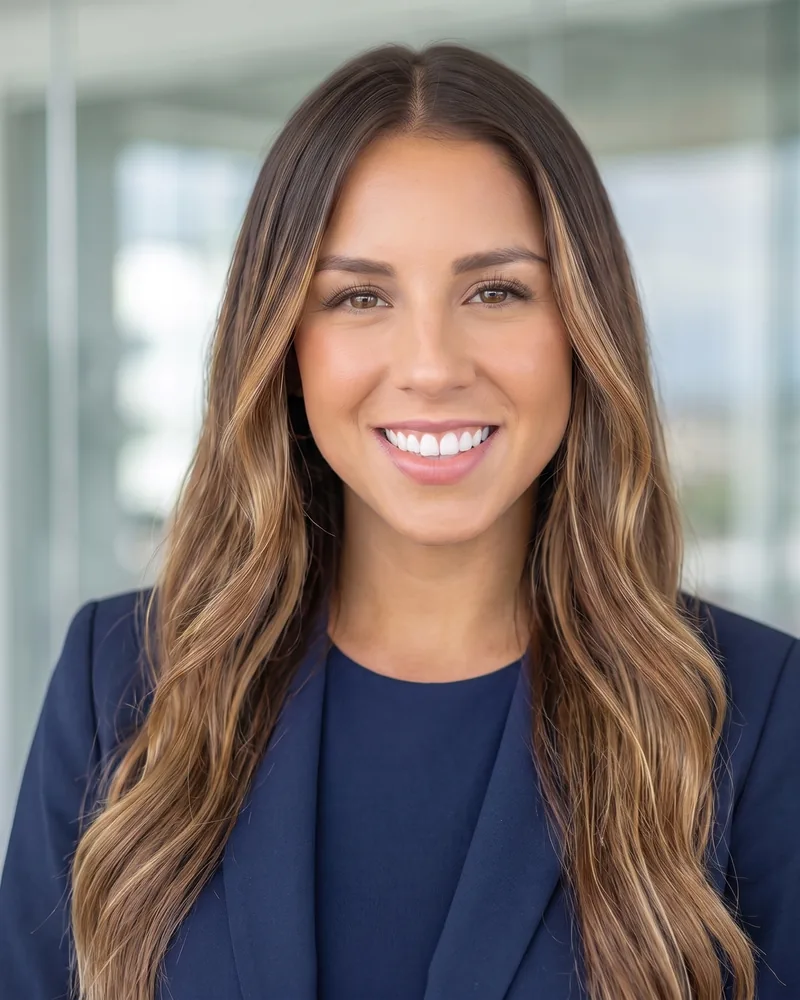
I'm Jennifer Asher Cardenas. Brightwork is my small-by-design studio in Aliso Viejo, and Social Media & Influencer Marketing is one of the nine services I offer, not a bolt-on. Over 12+ years and 50+ brands I've run creator programs that had to answer to sales, including the paid influencer work that supported Farmland Traditions' launch into Target.
Boutique means you get me: the same person choosing creators, writing briefs, negotiating rates, and reading the numbers. I'm an MBA marketer, born in Bogotá and based in SoCal, and I work in English y español, which matters more than people expect when casting creators in a county this diverse.
I'd rather tell you influencer marketing is the wrong move than sell you a program that won't pay for itself.
Areas served
Based in Aliso Viejo, working with brands across Orange County and nationwide. Casting is national when your buyer is national, hyper-local when your product sits on a shelf.
Related: the Orange County marketing agency hub, retail launch marketing, and event marketing in Orange County.
Good questions
Straight answers to what founders ask before starting a creator program.
There's no rate card, because cost depends on how many creators you use, what tier they sit in, and how many usage rights you buy. Market context from a named source: Influencer Marketing Hub's 2026 benchmark survey found about 55% of reported nano creator budgets and about 80% of UGC creator budgets under $500 per engagement. Those are industry figures, not Brightwork client data. A first program is usually scoped as a defined test wave, sized to your goals on a free discovery call. For broader context, see what marketing costs in Orange County.
Different jobs. Gifting is discovery: you send product, some creators post, and you learn cheaply who genuinely likes what you sell. It's unreliable by design, so it can't carry a launch date. Paid partnerships buy certainty: a defined deliverable, on a defined date, with rights you negotiated. Most programs run both. Gift widely to find the believers, pay the ones who converted, and turn the best into ambassadors. If your calendar has a hard date on it, pay for that window.
Enough to learn something, not so many that quality slips. In practice, eight to fifteen micro creators over six to eight weeks, mixing paid and gifted. Fewer than about five and you can't tell a good result from luck; more than twenty in a first wave and briefing quality drops. The goal of wave one isn't revenue, it's a shortlist: which creators produce content that performs in your ad account.
Not automatically, and this is the most expensive misunderstanding in the category. By default a creator owns what they make. Paying for a post buys the post, not the right to run that footage as an ad, put it on your site, or use it on Amazon. Usage rights are a separate, negotiable grant, priced by channel and term. Every Brightwork creator agreement settles it up front, alongside exclusivity, whitelisting permission, and FTC disclosure.
The failure is almost always one of four things. Creators picked on follower count instead of audience fit. A brief that was either a rigid script or so vague the creator guessed. No usage rights, so a few posts went up, scrolled away, and nothing could be reused. Or no measurement plan, so nobody could tell whether it worked, which gets read as "it didn't." What changes is the boring infrastructure: vetting on real audience data, briefs with a job to do, rights negotiated before signature, and reporting from day one.
Content usually starts landing four to six weeks in, once sourcing, contracts, shipping, and production are done. The first meaningful read comes around weeks eight to twelve, when there's enough creator content in the ad account to compare against your existing creative. Codes show sales earlier but understate the program. Compounding takes longer: ambassadors and a deep UGC library are a six to twelve month build.
No. Brightwork is an influencer marketing agency Orange County founders can reach directly, based in Aliso Viejo and working with clients nationwide. Creator casting is national whenever your buyer is national; local matters most when your product has a physical footprint, whether that's retail doors, a restaurant, a studio, or an event where creators have to show up. Typical fit is a brand doing roughly $1M–$20M that has outgrown DIY posting.
Say hola
Tell me what you sell, where you sell it, and what you've already tried with creators. Every engagement starts with a free, no-pressure discovery call: two people working out whether an influencer marketing agency Orange County brands can reach directly is right for you.